
Sustainable fashion is the practice of creating and using clothing that minimizes harm to the environment and respects workers’ rights throughout the entire lifecycle of a garment. The industry employs 430 million people globally, making it one of the largest labor sectors on earth. The sustainable fashion definition covers everything from raw material sourcing and factory conditions to how you wash, repair, and eventually discard a piece. Standards like GOTS (Global Organic Textile Standard) and GRS (Global Recycled Standard) give the term measurable weight. Without them, “sustainable” is just a marketing word.
What does sustainable fashion mean across the garment lifecycle?
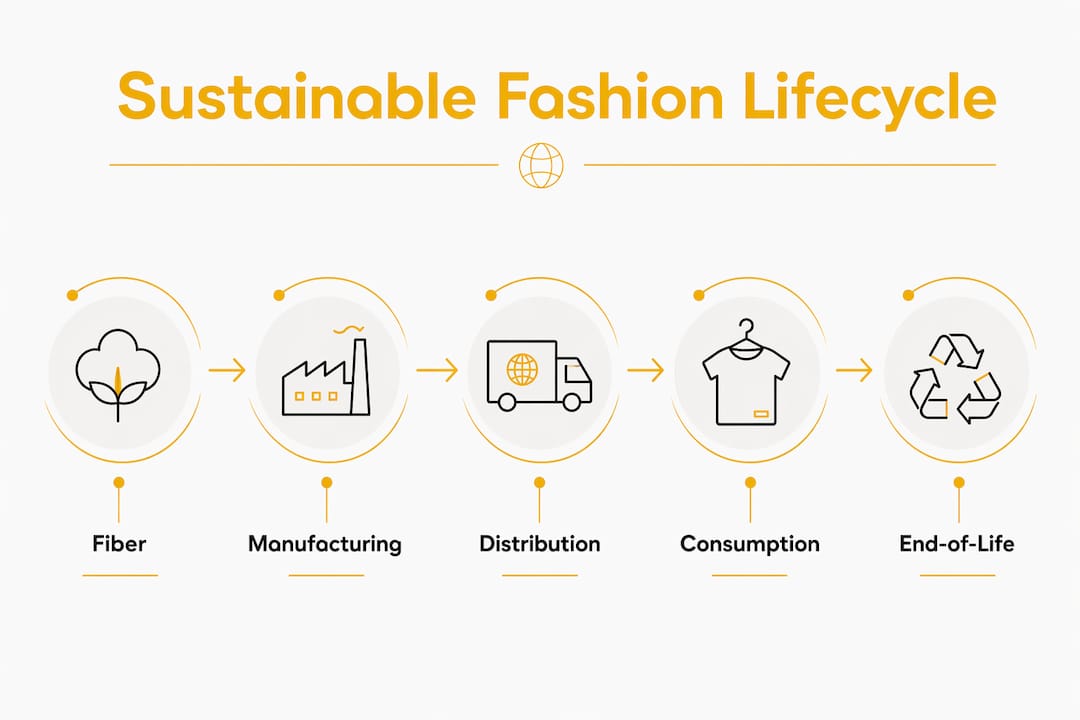
Sustainable fashion covers every stage a garment passes through, from fiber to landfill. Each stage carries its own environmental and social cost, and true sustainability requires addressing all of them, not just the most visible ones.
Environmental impact by the numbers
The fashion industry is the second-biggest consumer of water on the planet and accounts for 2–8% of global carbon emissions. That range is wide because supply chains vary, but even the low end is significant for a single industry. 85% of all textiles go to the dump each year. The equivalent of one garbage truck of textiles is disposed of or incinerated every single second. Domestic laundry alone releases 500,000 tons of microfibers into oceans annually. These numbers show that the problem is not limited to factories. It follows a garment all the way into your washing machine.
| Lifecycle stage | Key sustainability concern |
|---|---|
| Fiber production | Water use, pesticide runoff, land degradation |
| Manufacturing | Carbon emissions, chemical dyes, worker safety |
| Consumer use | Microfiber pollution, energy from washing |
| End of life | Landfill waste, incineration, low recycling rates |
Social sustainability and the 430 million workers
The social dimension of sustainable fashion centers on the people who make clothes. The industry’s 430 million workers are predominantly women, many in low-income countries with limited labor protections. Sustainable fashion practices require fair wages, safe working conditions, and freedom from forced overtime. These are not optional add-ons. They are core to the sustainable fashion definition.
Circular design principles
Circular design requires garments to be made for longevity, repairability, and recyclability to keep materials in use as long as possible. A circular garment is designed so its components can be separated and reused at end of life. The problem is that most clothes today blend fibers, which makes mechanical recycling nearly impossible. Circularity is the goal; most of the industry is still far from reaching it.
Pro Tip: Check the care label for fiber composition before buying. A garment made from a single fiber type, like 100% organic cotton, is far easier to recycle than a cotton-polyester blend.
How does sustainable fashion differ from ethical and slow fashion?
These three terms overlap, but they are not the same. Confusing them leads to poor purchasing decisions and makes it easier for brands to mislead you.
Ethical fashion focuses primarily on people. It asks whether workers received fair pay, whether factories were safe, and whether labor rights were respected. A brand can be ethical without being environmentally sustainable.
Slow fashion focuses on consumption frequency. It pushes back against the fast fashion model of weekly new arrivals and encourages buying fewer, better pieces that last longer. Slow fashion is a behavioral shift as much as a production philosophy.
Sustainable fashion focuses primarily on environmental impact, though it overlaps with both of the above. A brand can use certified organic materials while still failing to pay a living wage across all supply chain tiers. The reverse is also true: a brand can employ fair-wage labor while relying on virgin polyester and high-pollution dyes.
| Term | Primary focus | Key concern |
|---|---|---|
| Sustainable fashion | Planet | Emissions, water, waste, materials |
| Ethical fashion | People | Wages, safety, labor rights |
| Slow fashion | Behavior | Consumption frequency, garment longevity |
The most responsible brands address all three dimensions. Most brands address one, sometimes two. Knowing the difference helps you ask better questions before you buy.
- Sustainable fashion targets environmental footprint across the full lifecycle.
- Ethical fashion targets human rights and fair labor conditions.
- Slow fashion targets how often consumers buy and how long they keep clothes.
- All three are necessary for a genuinely responsible fashion system.
What are the biggest challenges and misconceptions in sustainable fashion?
The importance of sustainable fashion is clear. The path to practicing it is not. Several structural problems make it hard for consumers to know what they are actually buying.
No legal definition exists
Sustainable fashion has no legally binding definition in the EU or the US. This gap allows brands to self-regulate. Terms like “conscious,” “eco-friendly,” and “green” carry no standardized legal meaning. A brand can print any of those words on a hangtag without meeting a single objective standard. This is the root cause of greenwashing.
Greenwashing is the norm, not the exception
Greenwashing is when a brand uses environmental language to create a positive impression without making meaningful changes to its practices. It is widespread precisely because no legal framework prevents it. The solution is third-party certification. GOTS and GRS certifications are objective standards verified by independent auditors. They are not perfect, but they are far more reliable than any marketing claim a brand makes about itself.
Pro Tip: When a brand uses the word “sustainable” without linking to a specific certification, treat it as unverified. Look for GOTS, GRS, OEKO-TEX® STANDARD 100, or Fair Trade certification marks instead.
Recycling is not the answer
Less than 1% of all clothing material currently gets recycled into new clothing. This statistic dismantles the idea that recycling bins and “take-back” programs solve the fashion waste problem. They do not. Reducing how much you buy and extending the life of what you own has a far greater impact than recycling alone. Sustainability exists on a spectrum. No brand is perfect, and no single action fixes the problem. Progress requires reducing consumption first, then improving what gets produced.
- “Eco-friendly” and “conscious” are marketing terms with no legal standard.
- GOTS certifies organic fiber processing from farm to finished product.
- GRS certifies the use of recycled content in materials.
- OEKO-TEX® STANDARD 100 certifies that a fabric contains no harmful substances.
- Recycling alone cannot offset the volume of waste the industry generates.
How to shop sustainably and apply sustainable fashion practices
Knowing how to shop sustainably starts with changing what you look for before you buy. The goal is not perfection. It is making better decisions more consistently.
-
Prioritize certified garments over marketing claims. Look for GOTS, GRS, or OEKO-TEX® STANDARD 100 labels. These certifications are verified by independent bodies and carry real accountability. A brand that invests in certification is signaling a genuine commitment, not just a marketing strategy.
-
Buy fewer, higher-quality pieces. A well-made garment worn 200 times has a lower environmental cost per wear than a cheap garment worn 10 times and discarded. Quality and durability are sustainability tools. Choosing organic cotton T-shirts built to last is a direct application of this principle.
-
Support brands with transparent supply chains. Meaningful sustainability requires transparency on manufacturing processes, costs, and end-of-life disassembly, not just isolated product improvements. Ask where a brand’s garments are made and whether it publishes a supplier list. Most brands only have visibility to their tier 1 suppliers. The ones that go further are worth supporting.
-
Apply the 7 R’s framework. The 7 R’s of sustainable fashion are Reduce, Reuse, Repurpose, Repair, Recycle, Rent, and Resell. Work through this list in order. Reducing what you buy is more impactful than recycling what you discard.
-
Care for your clothes to extend their life. Wash in cold water, air dry when possible, and store garments properly. These habits reduce microfiber shedding, lower energy use, and extend the functional life of a piece by years. A garment that lasts longer does not need to be replaced, and that is the most sustainable outcome of all.
-
Choose natural or certified recycled fibers. Organic cotton, linen, and recycled polyester (certified under GRS) are preferable to conventional synthetic fibers. They are not flawless, but they carry a lower environmental burden when produced under verified standards.
Key takeaways
Sustainable fashion is defined by its full lifecycle impact, and reducing consumption frequency matters more than any single material choice or recycling program.
| Point | Details |
|---|---|
| Lifecycle thinking | Sustainability covers fiber production, manufacturing, consumer use, and end-of-life disposal. |
| Certification over claims | GOTS, GRS, and OEKO-TEX® STANDARD 100 are the only reliable signals of genuine sustainability. |
| Ethical vs. sustainable | A brand can be ethical without being sustainable, and vice versa. Both dimensions matter. |
| Recycling limits | Less than 1% of clothing is recycled into new clothing. Reducing consumption is more effective. |
| The 7 R’s | Reduce, Reuse, Repurpose, Repair, Recycle, Rent, and Resell form a practical consumption framework. |
What I’ve learned from years of watching the sustainable fashion conversation
The loudest voices in sustainable fashion tend to focus on materials. Organic cotton versus conventional cotton. Recycled polyester versus virgin polyester. These comparisons matter, but they distract from the bigger issue: volume.
The fashion industry’s core problem is that it produces too much, too fast, and too cheaply. No material innovation fixes that if the production rate stays the same. I’ve watched brands launch “sustainable collections” while simultaneously expanding their overall output. That is not progress. It is optics.
The certification system is imperfect but necessary. GOTS and GRS are not magic. They do not guarantee a perfect product. But they create accountability that self-reported claims never will. Consumers who learn to read certifications rather than marketing copy are harder to mislead. That shift in consumer literacy is the most underrated force for change in this industry.
Systemic change also requires brands to publish more than a sustainability page on their website. Full supply chain transparency, including tier 2 and tier 3 suppliers, is rare. The brands that achieve it deserve recognition. The ones that don’t should be asked why.
My honest take: sustainable fashion is not a destination. It is a direction. Every purchase is a small decision, and those decisions accumulate. The goal is not to buy perfectly. It is to buy less, buy better, and hold brands to a higher standard than their own marketing.
— Simon
Svalcph’s approach to sustainable streetwear
Svalcph builds its collections around the same principles this article covers: durable materials, ethical production, and designs made to last more than one season.
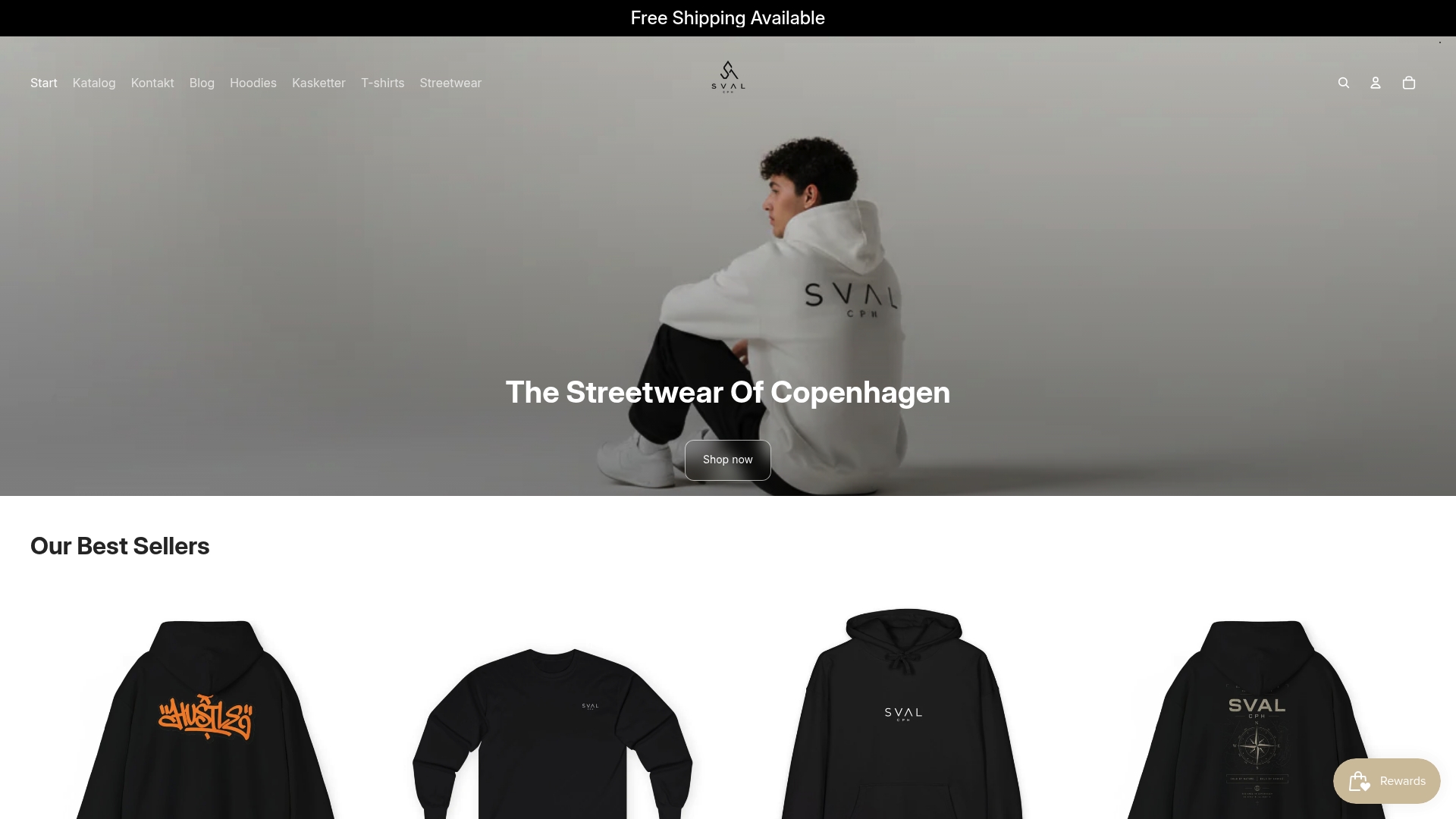
The Svalcph streetwear collection uses premium fabrics with clean, relaxed silhouettes built for real wear. The hoodies and sweatshirts are crafted for longevity, not trend cycles. If you want pieces that align with sustainable fashion practices without sacrificing style, Svalcph’s Nordic streetwear is a direct answer to that need. Cold, bold, and built to last.
FAQ
What does sustainable fashion mean in simple terms?
Sustainable fashion means designing, producing, and consuming clothing in a way that minimizes environmental damage and respects workers’ rights throughout the garment’s full lifecycle.
What is the difference between sustainable and ethical fashion?
Sustainable fashion focuses on environmental impact, while ethical fashion focuses on labor conditions and fair pay. A brand can be one without being the other.
How can I tell if a brand is genuinely sustainable?
Look for third-party certifications like GOTS, GRS, or OEKO-TEX® STANDARD 100. These are verified by independent auditors and are far more reliable than terms like “eco-friendly” or “conscious.”
Why doesn’t recycling solve the fashion waste problem?
Less than 1% of clothing material is currently recycled into new clothing. Recycling infrastructure for textiles is limited, and most blended-fiber garments cannot be mechanically recycled at all.
What is the most effective way to shop sustainably?
Reduce how often you buy, prioritize certified and durable pieces, and extend the life of what you own through proper care and repair. Buying less has a greater impact than any single material choice.